Le Domaine de Saint Aubin
Le Domaine de Saint Aubin is sustainable with practices in Holistic Plant Health, Biodiversity, Hand Pollination, Low Impact Growing, Closed-Loop Estate Synergies, Agri-Tourism, Cultural Preservation, and Natural Curing Methods. Culinary Art destinations across the globe have modeled their entire corporate and operational structures after this specific estate-to-table, closed-loop system prioritizing agricultural self-sufficiency, artisanal curation and heritage tourism. One day, I’d like to offer the same, connect with me, and let’s see where we can grow together!
A main reason I chose to vacation on this island, which took two days flight to arrive from the US is I wanted to learn what it takes to literally go from bean to bar with my own eyes, ears and tastebuds, I wanted real experience on a large scale. I wanted to take skills back with me, if not skills, then information, and learning how to take one ingredient and use it numerous types of ways, with zero waste. By this I will explore how I can use these practices in my own garden and growing factors. But that’s not all.
Why? Because I’m a foodie, who wants to be a Chef. Foodie wise I learned from my grandmother’s sheer perfection in cooking and baking. My Grandma Sassy was epic in her attention to detail, care, hospitality, and appetite, she was a joy to experience. I picked it up, and have been enhancing this by my domestic and international travels. But simply put I’m an admirer and lover of great food. Being a foodie is also a talent, a gift, a hobby, a lifestyle and I’m here for it. As an educator I look for opportunities to learn, grow, apply and expand my wisdom in food. As a fellow for the Institute of Human Individuality, under Dr. Peter D’Adamo of the Blood Type and Geno Type Diet, I’ve come to better understand that food is medicine and medicine is food. After all, God would not have put us here on Earth if he didn’t provide all the resources we needed to grow, and have joy in it.
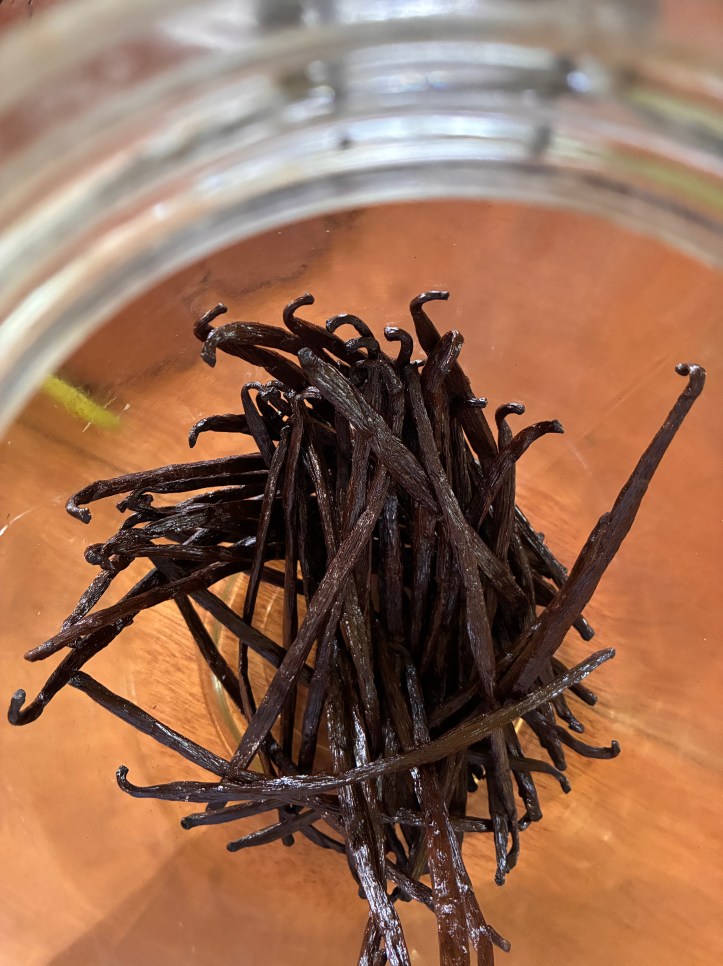
You may recall, a few years ago I ordered Vanilla from Madagascar, opened up the bean and made homemade Vanilla for my house and gifted numerous bottles. Then why not go to Madagascar for vanilla you may ask? One, Mauritius has a much more travel safety index and two, Mauritius is smaller, I like that, no mass exporting, and the distinct island microclimate and volcanic terroir allows local producers to focus on boutique, chemical-free, and organic cultivation. Especially in the areas of Chamouny, and Saint Julien d’Hotman, where I visited. As a future Chef applied knowledge is key, knowing and caring is love.
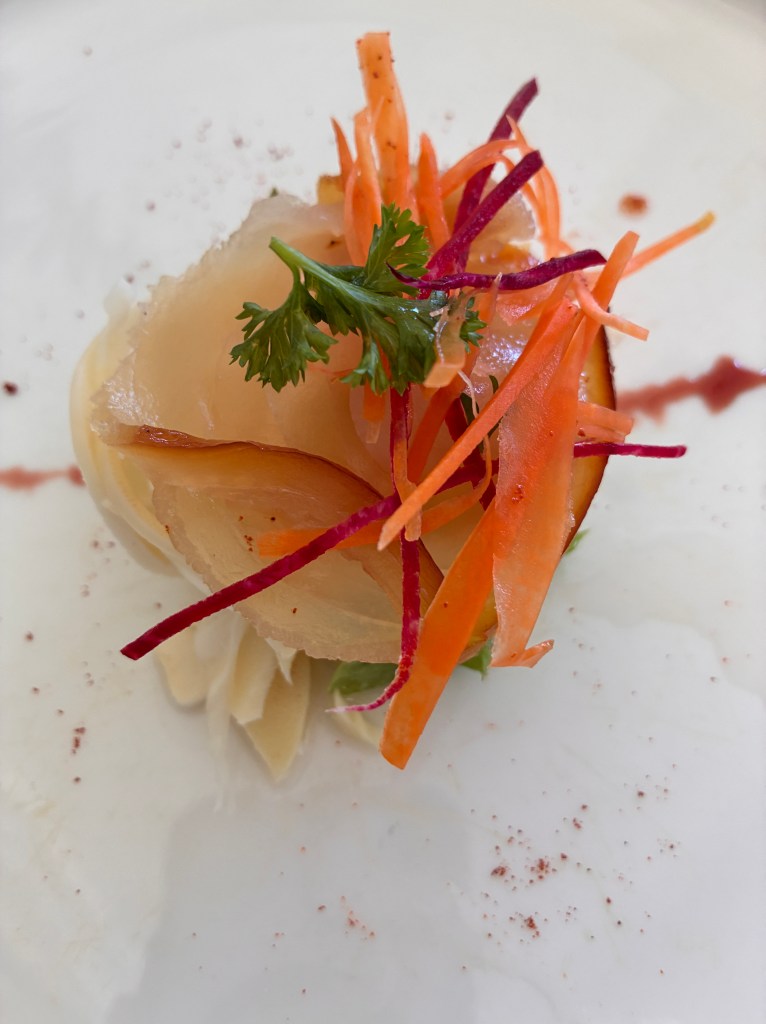
But why vanilla? Why not vanilla? Since you are getting to know me and my taste, I’ll let you in on a fact, homemade cookies are my favorite food! Cookies require vanilla, cookies need vanilla, and so does hot chocolate, my other favorite! Plus, vanilla is diverse, but who knew that it can also be used in savory chicken dishes, savory heart of palm dressing, lentils, rolls, and basmati rice? I gained exposure firsthand and how Le Domaine Saint Aubin uses the traditional Mauritian concept of an estate host table to explore the global trend of self-sustaining micro-ecosystems sourcing vanilla, and it was incredible. Designed by nature, things that grow together go together, and here in what seemed The Garden of Eden, wonderful things grow in abundance.
Terroir (pronounced ter-whar)
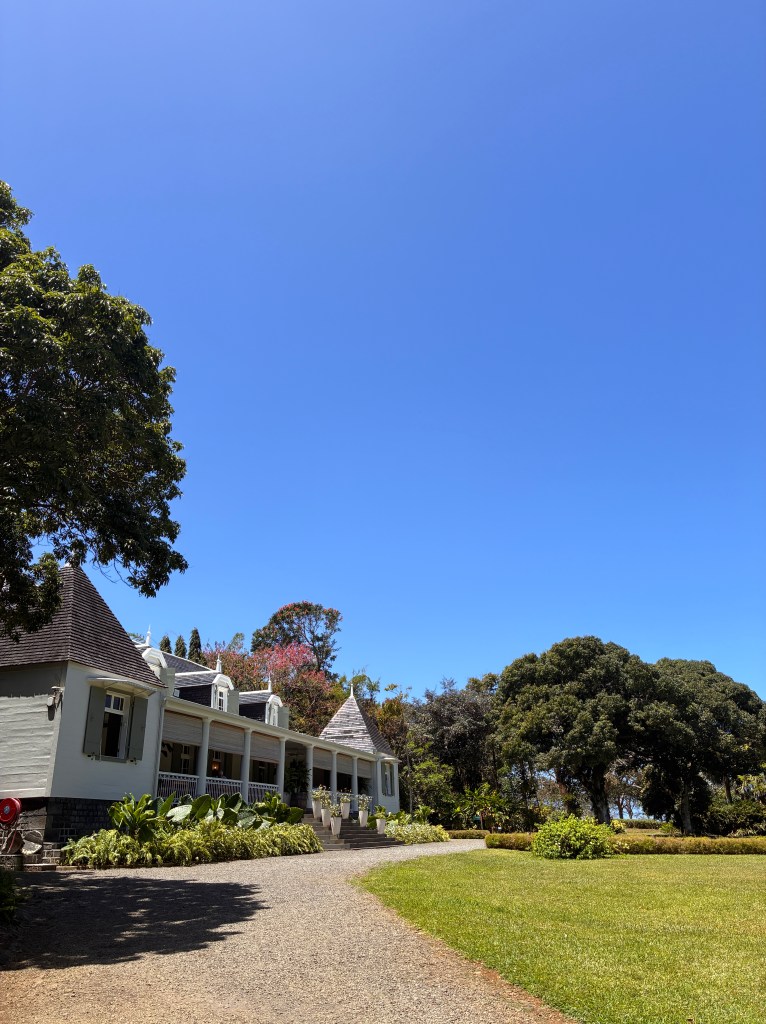
Terroir (pronounced ter-whar) is the soil, climate, topography, terrain, sunlight, and even tradition of natural and environmental factors. Terroir gives things like vanilla pods, sugar cane, and spices their unique character and flavor. Le Domaine de Saint Aubin in Mauritius, the African Island Nation is home to Grade A Vanilla, where Saint Aubin maximizes vanillas potential.
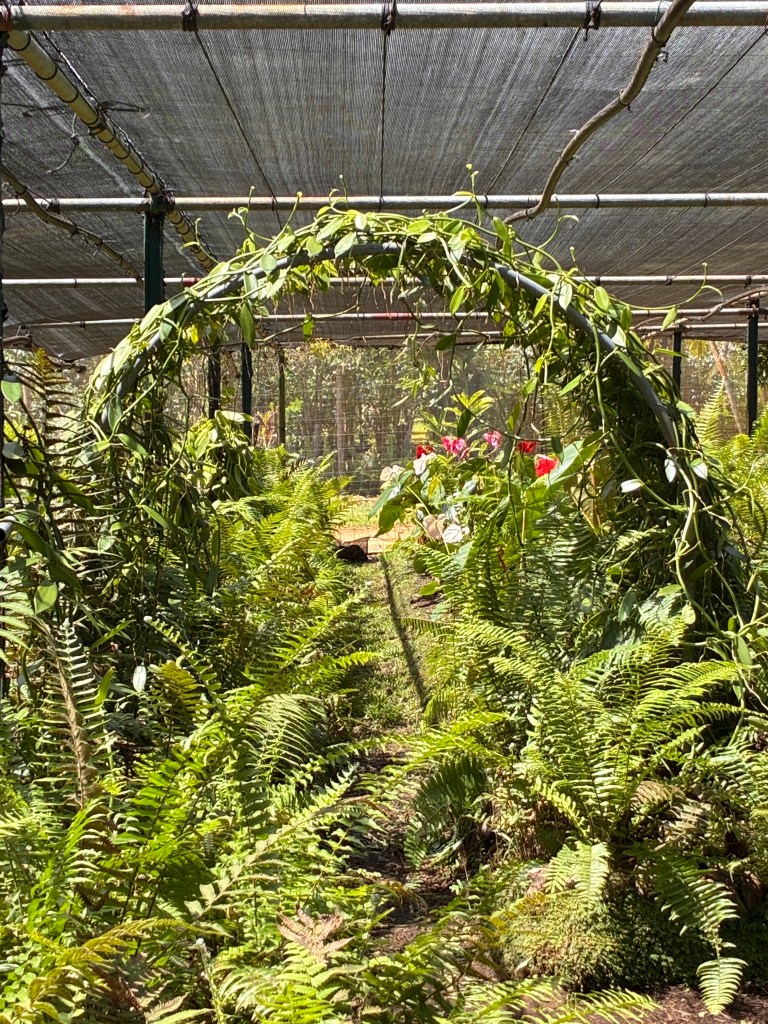
Every tree at Le Saint Aubin is filled with fruit, coconuts, mangos, bananas, citrus and more, the fields yield tea leaves, vanilla pods, and cacao in some areas. Sitting just 1.5 miles from the Indian Ocean, the breeze flows onto the plantation making the air incredibly clean and aromatic with sweet sugar cane and hints of rum from the distillery. The rows of vanilla vines as far as the eye could see are held up with broken-down coconut shells, and hairs that irrigates and aerates and mulches the soil and compost. I was able to tour the massive rows and learned that it took three years to yield the grade A Vanilla pods I purchased on site, I treasure them and with great care I plan on making a variety of culinary delights with them. I had a tasting, and sampled things they made from the land like spices, tea, chutneys, salts, spreads, sweets, syrups, and even lotions and perfumes. At Le Saint Aubin Restaurant, Chef Jacqueline Dalais made starters, a main course and deserts, all with vanilla in every bite, and it was delicious!
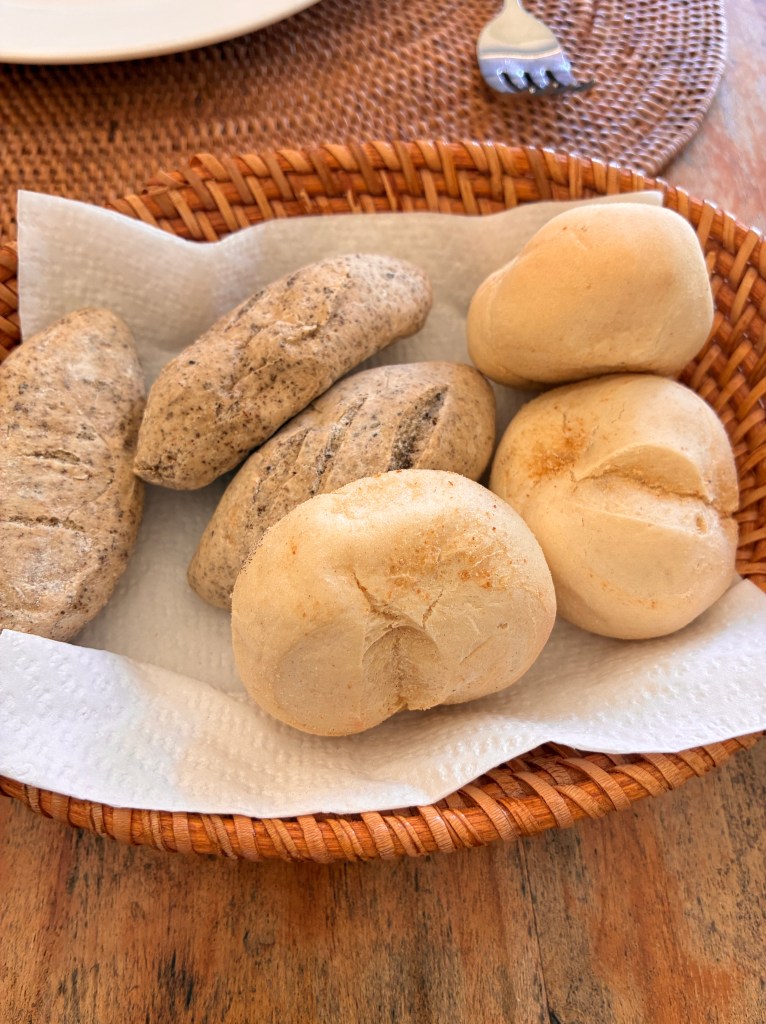
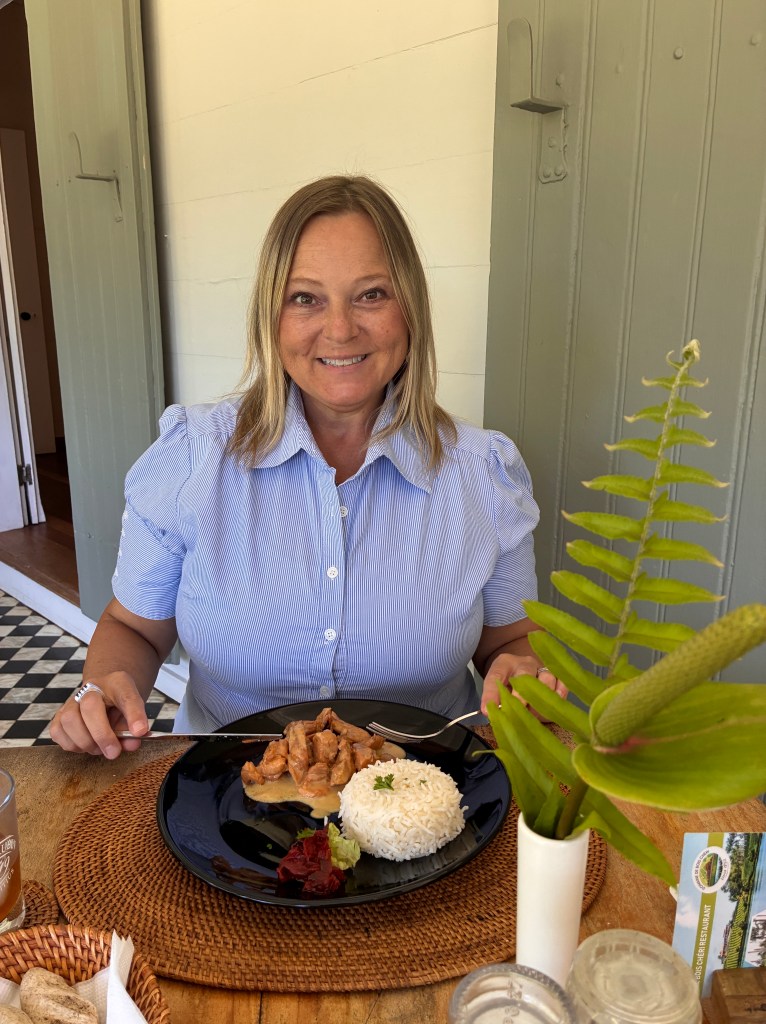
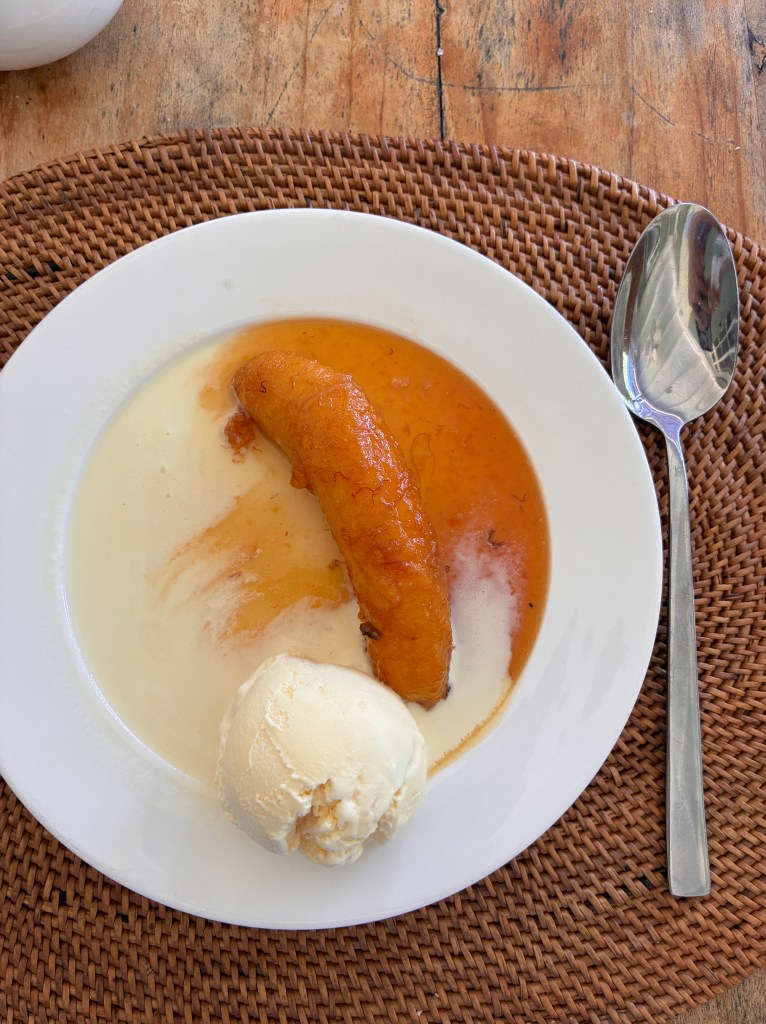
I might have lost some manners when this meal was presented to me, I may have looked like a soldier who only had 5 minutes to eat in chow hall, I practically swallowed my food and guzzled down three glasses of vanilla tea. The tea, best I’ve had my whole life, the rolls made from scratch with a hint of vanilla paste had a color of natural grey and blue stone served with cold butter in baskets made locally. I looked like a kid with jaw breakers in my mouth! The vanilla chicken diced in consistency; each chunk covered in a soft yellow aromatic sauce that whispered something savory but also delightful with a hint of vanilla rum. I’m now a fan of the heart of palm so long as I can make it the way Saint Aubin does, spiraled up in a heart shape with vanilla dressing on a drizzle, the combination of tastes was Geno harmonic. Lastly, I was served vanilla bean ice cream with rum sauce, and a caramelized vanilla and rum infused grilled and glazed banana.
Saint Aubin utilizes the single-origin, estate grown vanilla pods for a Tangy Twist of natural ingredients of acidity, infusions, botanicals, and alcohol over excess sugar, heavy creams, and synthetic flavors, they are a top-notch real-world example of pastry and culinary trends. Southern Mauritius has the distinct climate and soil profile allowing Chefs to highlight terroir. I am excited to explore in my own region what I can utilize best and draw from coastal terroir.
Le Saint Aubin is full-circle, houses three restaurants, vast gardens, tropical animals, distilleries, diverse employment, tourism and more, it’s one complete, self-sustaining micro-ecosystem. An old school model, the way it was and the way it should be, and is currently sweeping the global culinary community.
Mark Twain wrote in his travel journal “Mauritius was made first and then heaven; and heaven was copied after Mauritius”. Experience Terroir in Mauritius visually if you aren’t up to a two day flight, one way from the states. I’ve included some links to Saint Aubin. If you go, when you go, or where you go, Bon Voyage & Bon Appetite!
Where have you traveled for culinary, or food education? Leave me a comment, I’d love to learn!

