
Preamble
My favorite topic in the world is spirituality. Through this topic, I come across a wide range of topics, including prayer, pondering, journaling, singing, listening, reading, and studying. These practices offer me countless opportunities to dig deeper. They allow me to ask meaningful questions. I learn from others about religion, the gospel, and personal pursuits. All of this helps me gain a better understanding and draw closer to our Savior.
I have read countless books on doctrine, religion, and spirituality. My primary focus is the study of Eschatology. To fully understand this complex topic, I glean insights from all areas of Theology. I take steps to draw closer to the Spirit. This helps me discern the truthfulness of the gospel. I am beginning my reflections with the latest book I have completed. I am presently reading another, and once I finish it, I will share my reflections and continue my journey. I hope you will find something meaningful in each of my writings.
James Montgomery Boice’s commitment to writing demonstrates his passion for helping others come to Christ. In Foundations of the Christian Church, Boice highlights that over time, the world’s educational systems have shifted focus. They have increasingly concentrated on less important aspects. They now embrace the idea that life can be understood and lived independently of religious influences. He reflects on Harvard’s 17th-century mission statement “to know God and Jesus Christ, which is life eternal.” The institution expressed through this foundation—Christ, who is pure and holy—one can achieve sound knowledge, learning, and wisdom. Even in these days, too few recognize the statement as truth, and even fewer embrace it. Boice hopes his revised version will honor God. He wants it to inspire more individuals to seek a deeper connection with him.
Despite the significant shift in educational paradigms, he hopes that the revised volume expresses the importance of knowing God. Boice asserts that believers and followers of Christ who seek wisdom find fulfillment. They achieve this through deepening their relationship with God.
The next paragraphs outline significant findings in each chapter of this book. Follow along as I study Theology, grasping the best bits from this book, other books, podcasts, lessons, and more. Below is the first of eighteen takeaways from the well-known theologian James Montgomery Boice. I encourage you to search the scriptures as I did. The next scriptural references I include are from the King James Version.
Exordium
The design of God’s plan is for us to know him, to come unto him willingly. We are in the likeness of him. We are his children. He loves us and hopes that we overcome evil. He wishes for us to choose righteousness. For us to join in God’s plan, we must walk the path his son paved, to return unto him. Christ knew and accepted his mission. His mission was to bring us back into the fold. It was challenging as it was, herding sheep. He was obedient to his father. The Lamb of God loves us unconditionally.
Prophets, apostles, teachers, and disciples have all testified to the truth of God’s words. Yet, embracing another reality is like watching a parade from the curb. You are merely a spectator, not a participant. One can’t honestly know or experience being born again in Christ this way. Boice emphasizes that a learner must undergo spiritual transformation and come to understand who God is for themselves. Instead of denying ourselves personal experiences, we should diligently and actively seek Him. We need to act and step off the curb. The effort we put into this pursuit will show in what we gain from it.
Knowing God is not a one-time event. Countless accounts in the Holy Scriptures teach about Christ, the Prophets, and the Apostles, illustrating ongoing relationships with God. They actively sought Him, and we must follow their example. We should start by embracing the Holy Scriptures. Study them and pray. Invite the Holy Spirit to be a witness in our lives. Read the works of others, share your testimony, and repeat this process. To draw nearer to Him, our lives, minds, and actions must show the Gospel of Christ. We are encouraged to gain wisdom. This wisdom transforms us. It helps guide others to learn about the blessings of the Kingdom of Heaven.
Boice testifies to God’s glory and goodness. He is mighty, all-knowing, and all-powerful. All things were created through him. Just as we were made by him, in his image, he knows us. He loves us, and we are eternally connected to him. So, we ought to want to know him as he knows us. He loves us so profoundly. He provided us with a savior to redeem us from sin. From the moment we came into existence, we have been corrupted by evil. It was inevitable that we would be pressed hard. Through faith in his only begotten Son, he knew we would return to his presence. Still, we must first come to know him. But first, we must come to know him.
Stubbornness and lack of faith be our downfall; in contrast, we learn to be steadfast and welcome blessings. When Simon Peter saw it, he fell at Jesus’ knees. He said, “Leave.” Leave from me; for I am a sinful man, O Lord. Luke 5:8. The author shared this scripture passage to show willful obedience. If Simon Peter had exercised faith without question, he would have let down his net when the Master asked. He would have learned that faith is an action word. It requires never doubting. Murmuring invites sin, and procrastination is the seed of self-destruction. Simon Peter, yet, promptly repented upon seeing the multitude of fish. This is an excellent lesson for us to learn from.
Every head shall bow, and every knee shall bend. Yet, for those who know the truth and act not, sin lies at the door. For example, Christ performed miraculous works while He was on Earth. Though I didn’t witness them myself, I am sure these events took place. How did I reach this conclusion? Was it because someone told me, or did I read it in a book?
Boice breaks down how a person comes to understand their truth into three distinct categories. Yet, he ultimately suggests that there is only one proper way. The first two categories show the influences of the world. The three categories are as follows:
1. Is it reasonable, realistic, or rational?
2. Is it based on emotions?
3. Personal divine intervention.
I will choose the third choice, as through prayerful study and personal revelation, I arrived at that knowledge. “Come unto me, all ye that labor and are heavy laden, and I will give you rest. Take my yoke upon you. Learn of me, for I am meek and lowly in heart. Ye shall find rest unto your souls” (Matthew 11:28-29). Christ is speaking in the current tense. He urges us to act now and accept the invitation. He did the same with Simon Peter about the nets.
Jeremiah 31:34 “And they shall teach no more every man his neighbor. Every man his brother shall say, ‘Know the Lord.’ They shall all know me, from the least of them unto the greatest of them, saith the Lord. I will forgive their iniquity, and I will remember their sin no more.”
Solomon, the son of David and king of Israel, feared the Lord our God. Proverbs 9:10 “The fear of the Lord is the beginning of wisdom.” Knowing the holy is also understanding. Yet, as noted in 1 Corinthians 2:14, the natural man does not accept the things of the Spirit of God. To him, they are foolishness. He can’t understand them because they are spiritually discerned.
The world often interprets the word “fear” in a particular way. This interpretation, reflected in Solomon’s verse, resembles the attitude captured by the acronym F.E.A.R., which stands for “Forget Everything and Run,” seen among those who stray from God’s guidance. As Boice explains, from the very beginning, people knew God but did not honor Him or give thanks. As a result, they became futile in their thinking, and their senseless minds were darkened. Claiming to be wise, they became fools in various ways, illustrating another perspective on fear: “False Evidence Appearing Real.” As stated in Romans 1:19, “Because that which may be known of God is manifest in them, for God has shown it to them.”
God’s prophets, Christ, and His apostles taught wisely. They aimed to dismantle this type of fear with a humble approach: “Face Everything and Rise.” These lessons convey messages of hope and faith in God’s plan. They remind us that His works are for our advantage. Proverbs 9:10 expresses this idea. It says, “For by me, your days shall be multiplied.” Moreover, “the years of your life shall be increased.”
How can we start to emulate Him? The answer lies in John 11:26: “And whoever lives and believes in me shall never die. Do you believe this?” This question becomes our focus as we consider our primary aim. Guidance in Matthew 7:7 “Ask, and it shall be given to you; seek, and you shall find; knock, and it shall be opened to you.”
Continuing to proclaim the word of the Lord, Jeremiah 9:24 states: “But let him who boasts boast in this: that he understands and knows Me, that I am the Lord, who exercises lovingkindness, judgment, and righteousness in the earth; for in these things I delight,” says the Lord.
Unfortunately, humanity often tends to be weak, lazy, and worldly. Boice provides examples of false delights that ultimately hold no value. They lack true glory. These practices are fleeting and create a false sense of reality or connection. There are several examples. They include reliance on the laws of science. They also include mind-altering drugs and immoral practices. All of these stray far from the truth.
Romans 1:21-23 “Because that, when they knew God, they did not glorify Him as God, neither were they thankful; but became futile in their imaginations, and their foolish hearts were darkened. Professing themselves to be wise, they became fools. And exchanged the glory of the incorruptible God for an image made like corruptible man, and to birds, and four-footed beasts, and creeping things.”
Romans 1:20 “For the invisible things of Him from the creation of the world are seen, being understood by the things that are made, even His eternal power and Godhead; so that they are without excuse.”
Nicodemus is a clear example. He did not embrace the truth, which denied him the chance for revelation. He chose to live within the rigid confines of the Sanhedrin Council as a high-ranking Pharisee, fulfilling his role systematically. Interestingly, he sought a meeting with the Son of Man. While he attempted to ask questions, he started from what he already knew. Which reminds me of the adage “People don’t care how much you know until they know how much you care.”
“Thus, saith the Lord: Let not the wise man glory in his wisdom, neither let the mighty man glory in his might; let not the rich man glory in his riches.” Jeremiah 9:23.
Jesus said to him, “Verily, verily, I say unto thee, except a man be born again, he cannot see the kingdom of God” (John 3:3).
Nicodemus was entrenched in the council of the Sanhedrin. He embraced the prideful leadership of the Jews. He also fitted neatly into the structures of Roman bureaucracy. He has pleased many in his world. Despite this, he knew the truth deep down. Vanity obstructed his understanding. He was worldly, merely a part of a whole rather than being whole himself.
Daniel 11:32 states, “And such as do wickedly against the covenant shall he corrupt by flatteries; but the people that do know their God shall be strong and do exploits.”
Christ teaches us the way to honestly know God, for He understands the blessings that await us.
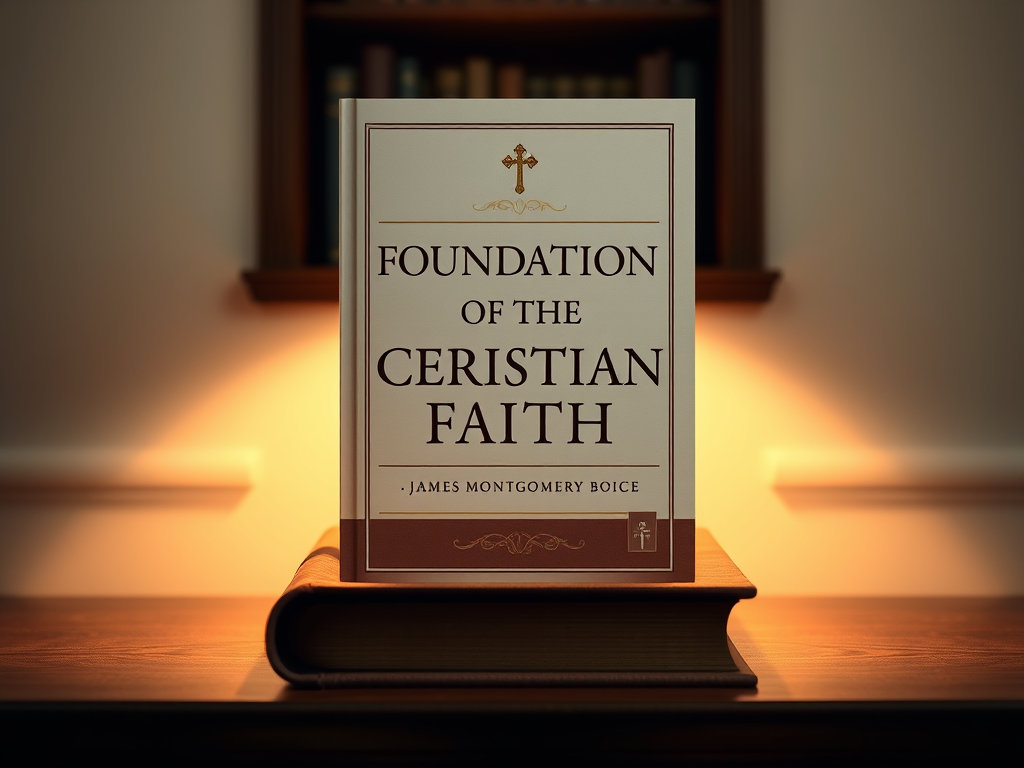
Below wraps up this phase, but stay tuned for part two.
Everyone must stay steadfast in seeking knowledge of light, truth, happiness, and everlasting life. The Holy Spirit can reveal this knowledge, as Boice summarized the simple steps he admired from author J.I. Packer about revelation and the central themes of these chapters. The answers to the question of how one can come to know God are as follows:
1. Listen to God’s word and accept it as the Holy Spirit interprets it for you.
2. Notice God’s nature and character as revealed through His word and actions.
3. Accept His invitations and follow His commands.
4. Recognize and rejoice in the love He has shown by approaching you and inviting you into this divine fellowship.
Through them we are promised life eternal, as written in John 17:3.
Thank you for taking the time to read my reflections and follow along in my journey. Every action moves me closer to my goal. I embrace that you are part of my journey. Cheers!
 Renee Nolte World